TABLE OF CONTENTS
Understanding Material Performance in Indian Climate
India’s climate presents a unique combination of challenges- intense sunlight, heavy monsoons, dust, and humidity. All modern retractable roofing materials are engineered to withstand these conditions, but their performance varies based on how they interact with light, heat, and structure.
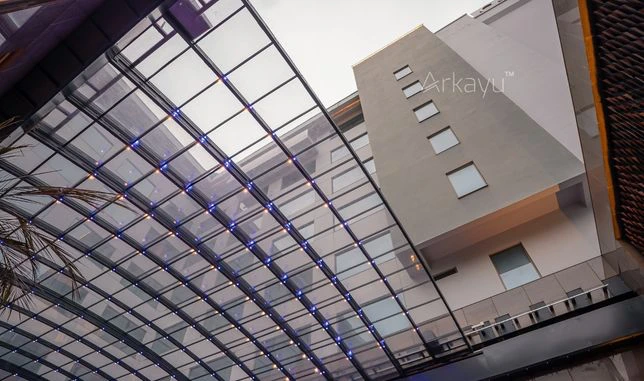
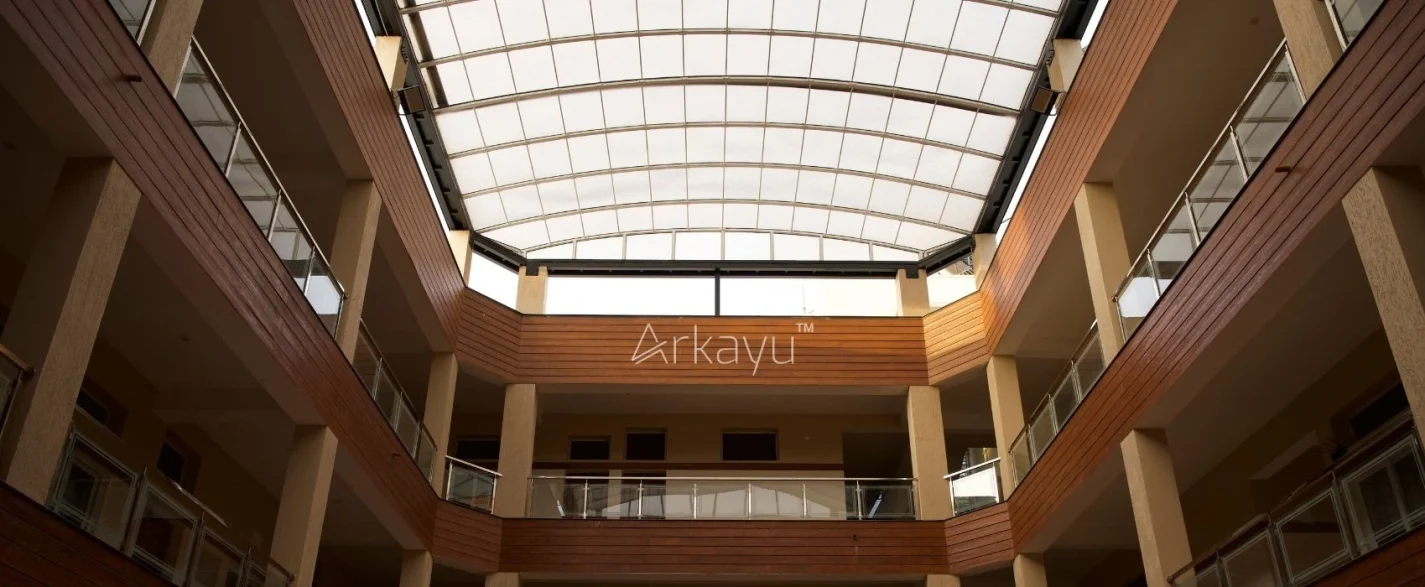
For example, polycarbonate retractable roofs provide durability and diffused light, making them suitable for large span applications. Glass retractable roofs offer premium transparency and aesthetics but require stronger structural support. PVDF fabric retractable roofs provide complete sunlight blockout, making them ideal for heat sensitive outdoor spaces.
The key is not choosing the “best” material but choosing the right material for the specific use case.
Why Material Choice Matters More in Indian Climate
In countries with stable weather conditions, material selection may not significantly impact usability. However, in India, where extreme heat, seasonal rains, and environmental conditions vary widely, choosing the wrong material can lead to discomfort and underutilisation of space. A roof that allows too much heat may make a space unusable during summer, while one that blocks all light may not suit areas designed for openness. This makes it essential to evaluate materials based on climate response rather than just aesthetics or initial preference.
Heat, Light & Comfort Comparison
Each material behaves differently when it comes to heat and light control. Polycarbonate offers a balance between protection and natural lighting. Options such as frosted or tinted sheets help diffuse sunlight, reducing glare while maintaining brightness.
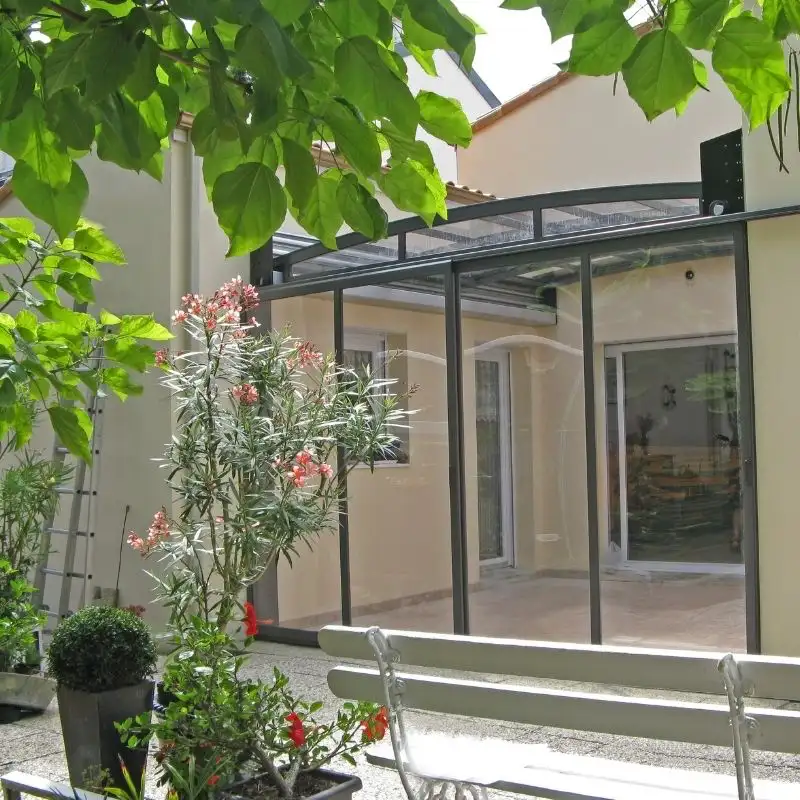
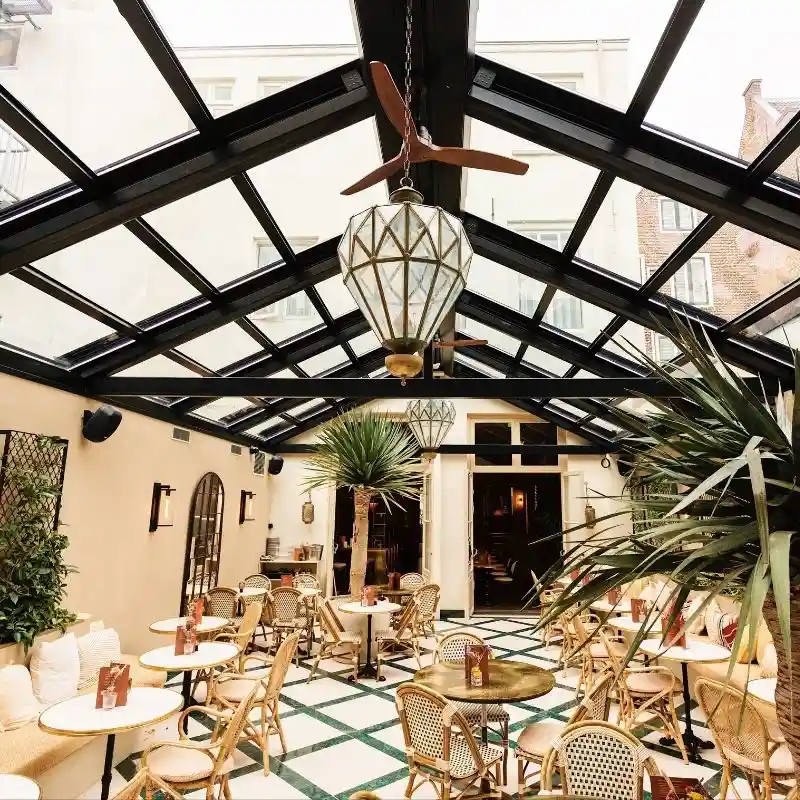
Glass provides maximum transparency and a premium look. With double or triple glazing, it can improve comfort levels, but it still allows significant light penetration compared to other materials.
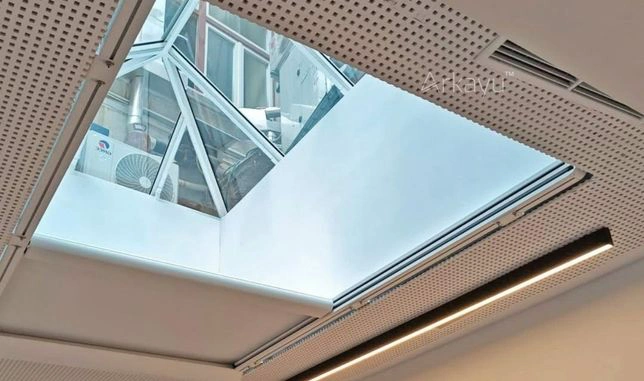
In contrast, PVDF fabric systems are designed for complete sunlight blockout, making them ideal for spaces where heat reduction is the primary goal. These systems can also be opened when sunlight is desired, offering flexibility. In projects where ventilation is equally important, bioclimatic aluminium louvered roofs provide adjustable light and airflow control.
Structural Performance & Lifespan
Structural considerations play a major role in material selection. Polycarbonate systems are lighter than glass and offer excellent strength, making them suitable for large spans with minimal load on the building. This makes them a preferred choice in projects where structural efficiency is critical.
Glass systems, while visually superior, are heavier and require stronger supporting structures. They are also the most premium option and must be carefully designed to ensure safety and performance.
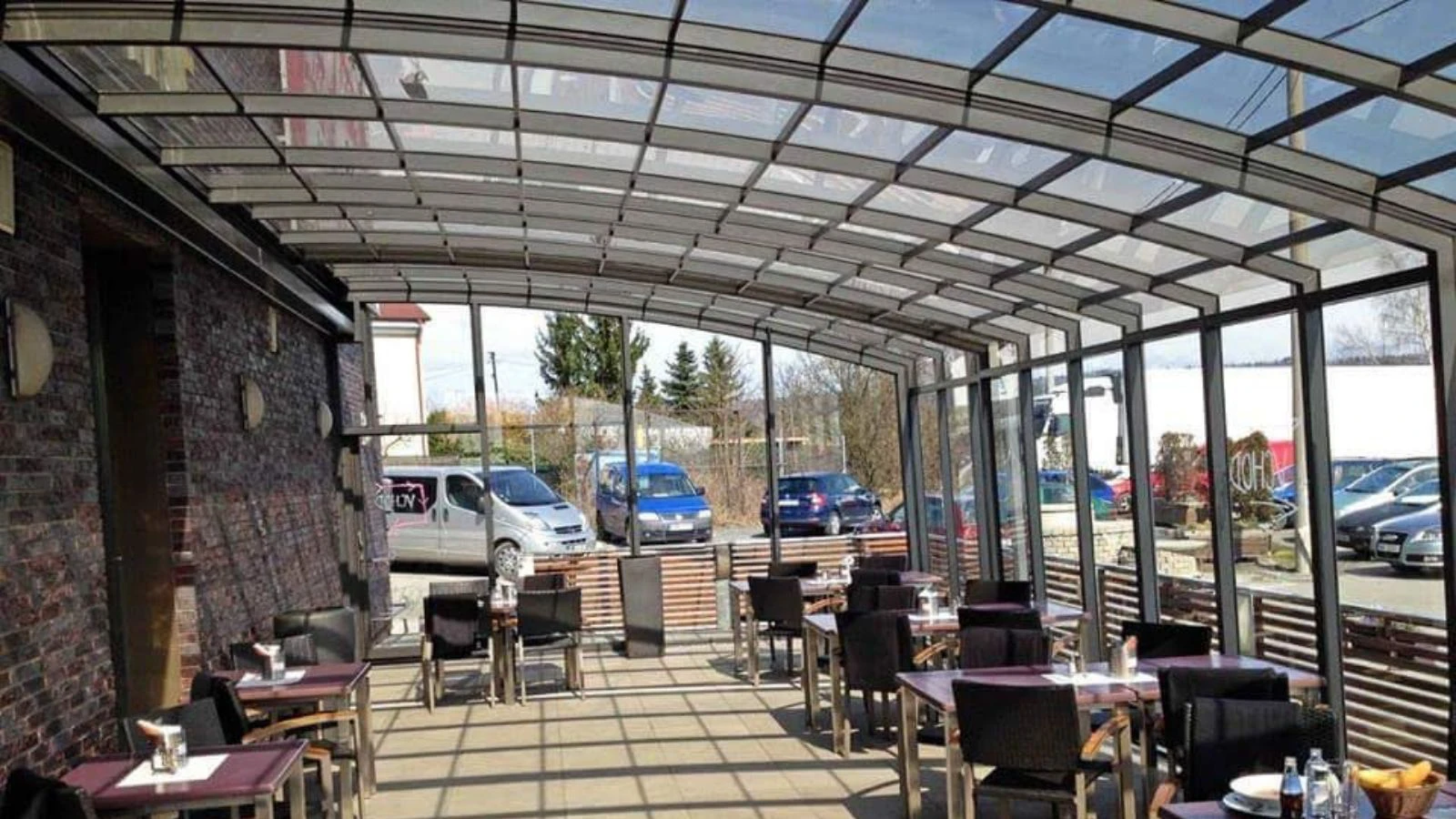
PVDF fabric systems, on the other hand, are lighter and more economical, but they typically require multiple modules for large areas, which introduces intermediate supports. In terms of lifespan, polycarbonate and glass systems generally last 20–25 years, while PVDF fabric systems have a lifespan of 10–15 years.
For additional heat control over transparent roofs, Skyzip fabric sun screens can be integrated effectively.
Which Material Should You Choose?
The right material depends entirely on your priorities and use case.
If your primary goal is large span coverage with minimal columns, polycarbonate is often the most practical choice. If you are designing a premium space where aesthetics and transparency are the top priority, glass becomes the preferred option.
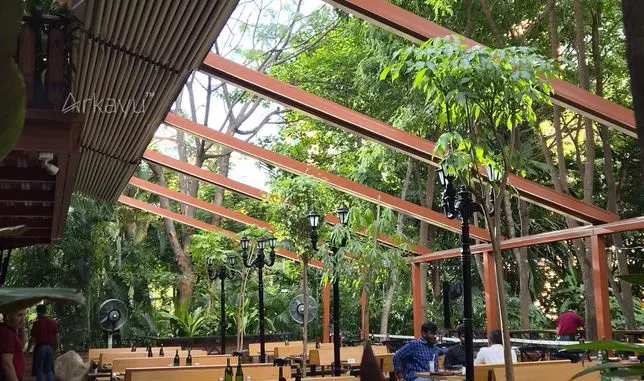
For areas where heat reduction and complete shading are critical such as terraces, restaurants, or banquet spaces, PVDF fabric systems provide the most effective solution while also being economical.
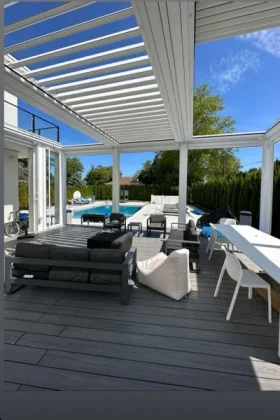
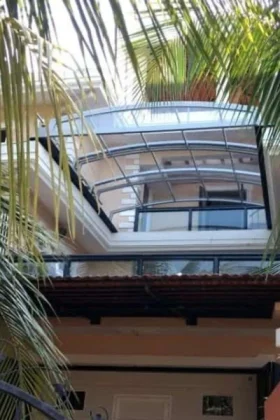
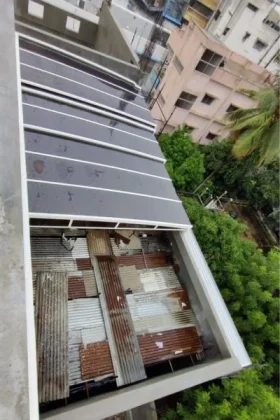
One of the most common scenarios is clients initially requesting glass roofs, only to realise that other materials may be better suited once the use case and structural conditions are evaluated. This highlights the importance of understanding performance rather than choosing based on perception.
To explore how different materials are selected based on project needs, you can visit the About ARKAYU page or refer to the FAQ section.
Contact us for a free consultation.
At ARKAYU, we help you choose the right retractable roofing material based on your space, climate conditions, and long term requirements ensuring the best balance between performance, design, and cost.