TABLE OF CONTENTS
Challenges of Conventional Construction in Remote Areas
Conventional construction is widely used and, in many cases, more cost effective. However, in remote or difficult terrains, it comes with practical challenges that can affect project timelines and execution.
Transporting construction materials to hills or isolated areas can be complex and expensive. Labour availability may also be limited, and the construction process itself is time consuming.
In addition, building on uneven terrain requires more preparation, which increases effort and complexity. These factors make conventional construction less flexible in certain environments.
Why Conventional Construction Fails in Remote Locations
In remote locations, construction is not just about building… it’s about managing logistics. The movement of materials, dependency on labour, and site preparation requirements can significantly slow down progress.
Unlike urban settings, where resources are readily available, remote projects often face delays due to accessibility issues. This makes conventional construction less adaptable in such environments, especially when faster deployment and flexibility are required.
Why Polycarbonate Domes Offer a Practical Alternative
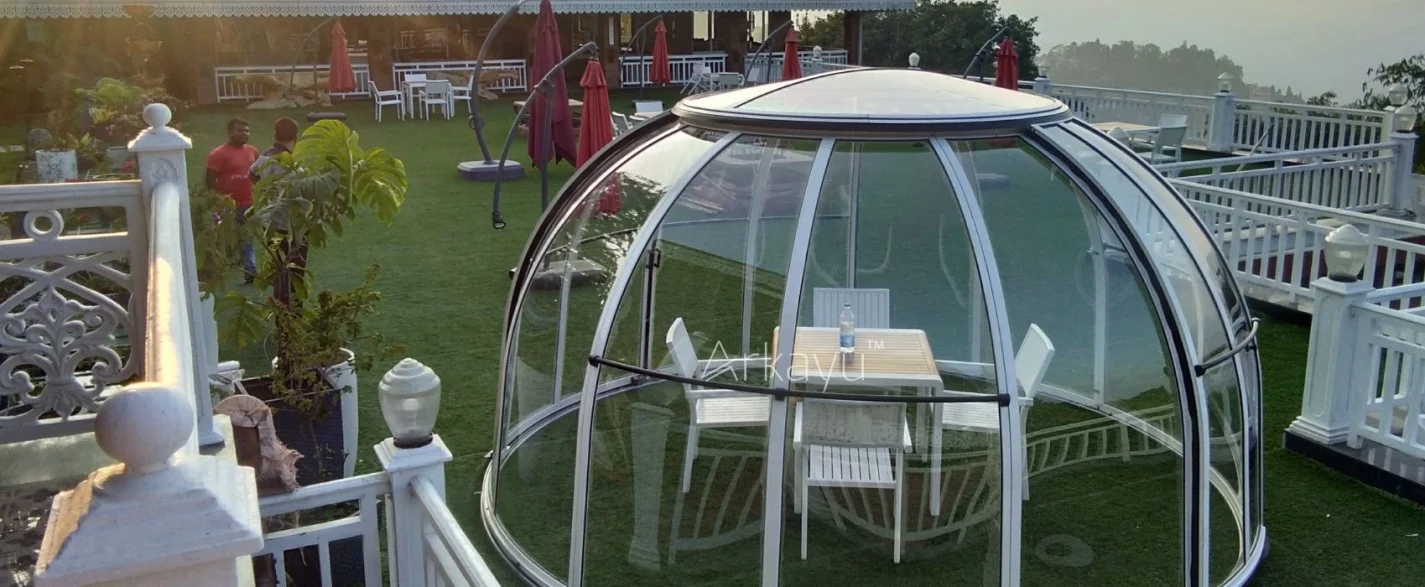
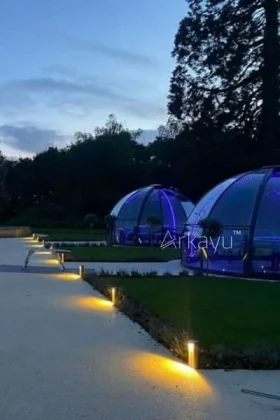
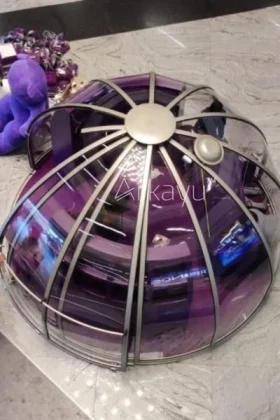
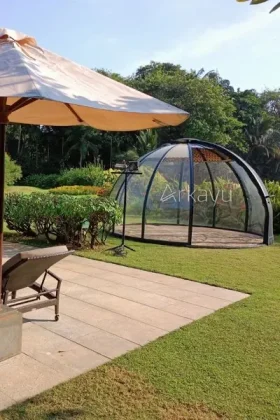
Polycarbonate domes provide a lightweight and modular alternative for specific use cases. Built using aluminium frameworks and polycarbonate panels, these structures are easier to transport and install compared to conventional construction.
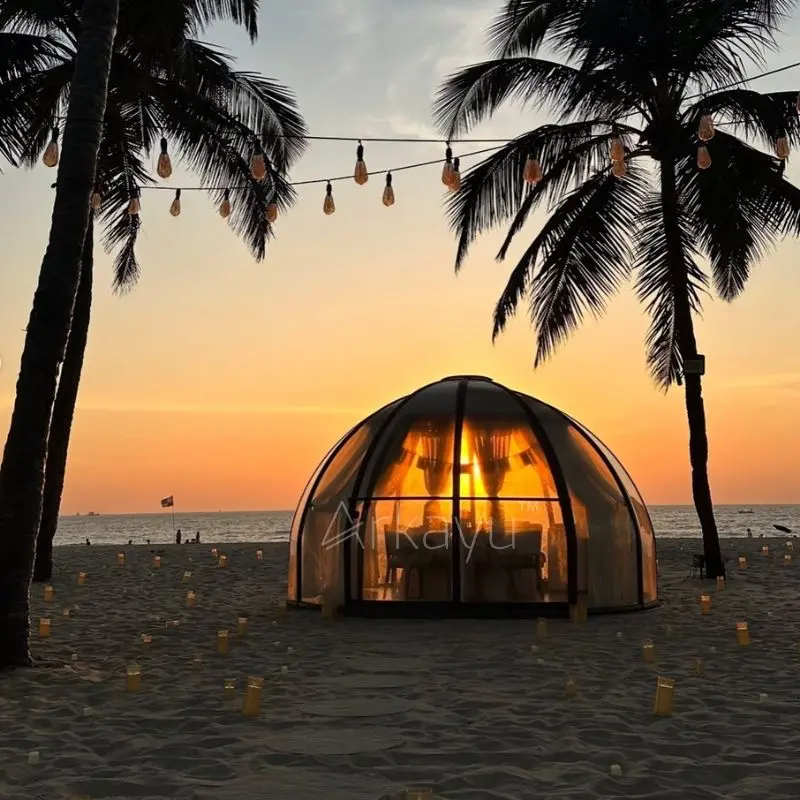
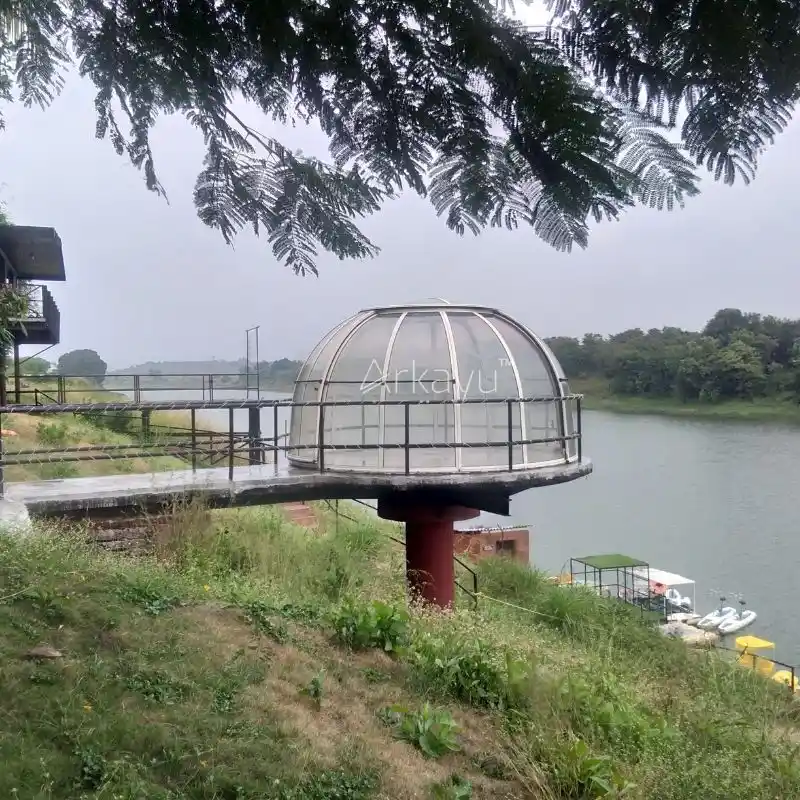
A polycarbonate dome, often referred to as a geodome or geodesic dome tent, is designed to minimise structural complexity while maintaining durability. The material is impact resistant, non shattering, and capable of forming curved geometries.
These domes are particularly useful in environments where quick setup and minimal site disturbance are important. Their ability to be installed and relocated adds to their flexibility.
Beyond practicality, domes also offer strong visual appeal. Their unique form makes them ideal for projects where design and experience are key considerations.
Comparing Domes vs Conventional Construction
Both polycarbonate domes and conventional construction serve different purposes, and the choice depends on the project requirements.
Conventional construction:
- More cost effective in standard conditions
- Suitable for permanent, all day usable structures
- Familiar and widely accepted
Polycarbonate domes:
- Ideal for remote or difficult terrains
- Faster to install
- Lightweight and modular
- Offer unique design and experience
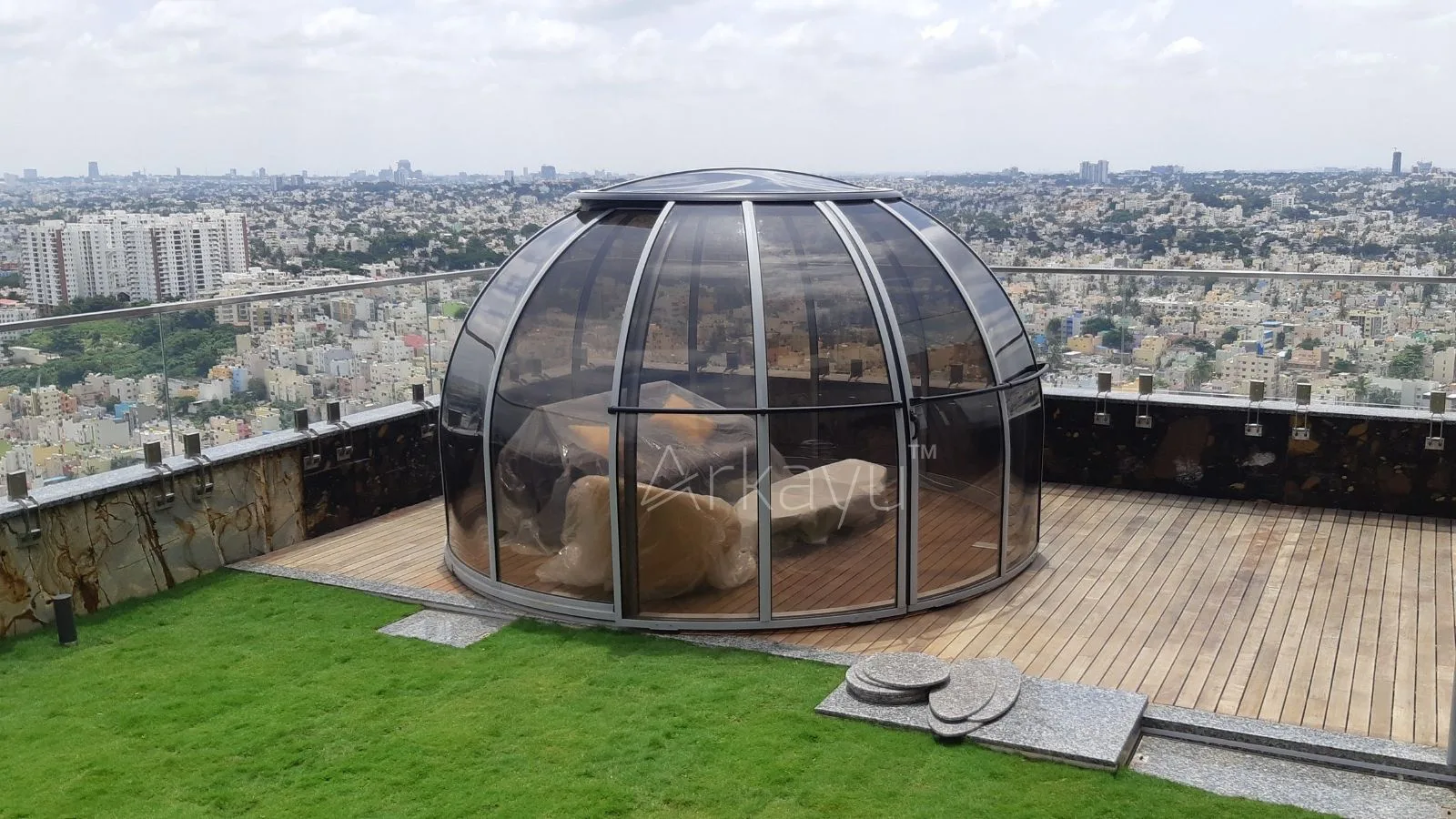
While conventional structures are better suited for long term residential use, domes are more appropriate for experience driven applications such as glamping domes, dome tents, and garden domes.
The comparison is not about which is universally better, it is about which fits the context.
When to Choose Domes (and When Not To)
Polycarbonate domes are best suited for applications where design, experience, and adaptability are priorities.
They work well in:
- Resorts and hospitality projects
- Farmhouses and leisure properties
- Terrace and penthouse spaces
- Children’s play areas
- Wellness and relaxation zones
They are designed to withstand rain and wind, making them reliable for outdoor use. However, direct exposure to sunlight can lead to heat buildup due to the greenhouse effect. This makes them more suitable for evening use, shaded areas, or controlled environments.
To explore dome solutions in detail, you can visit the Domes page.
You can also learn more about ARKAYU on the About page or refer to the FAQ section.
Contact us for a free consultation.
At ARKAYU, we design polycarbonate dome structures that combine practicality with architectural appeal helping you create spaces that work effectively in challenging environments.