TABLE OF CONTENTS
What Is a Polycarbonate Dome?
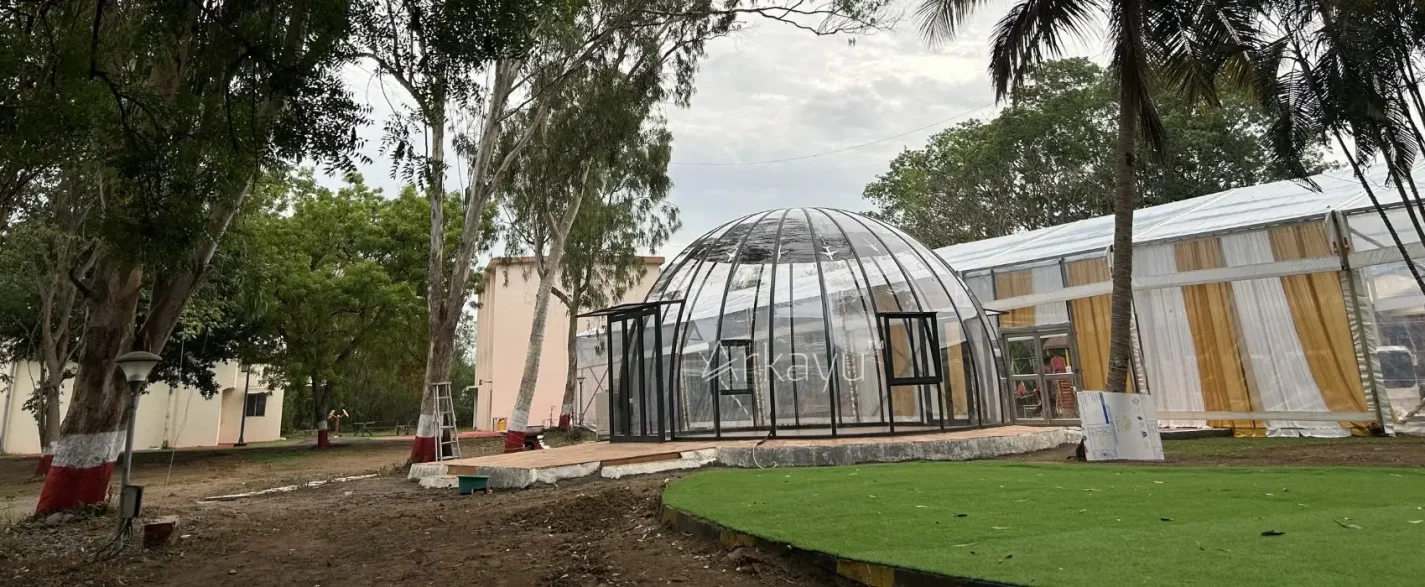
A polycarbonate dome is a hemispherical or custom shaped structure built using an aluminium framework and polycarbonate panels. The structure is designed to be lightweight, durable, and capable of forming curved geometries without compromising strength.
Unlike traditional rigid materials, polycarbonate can be bent to achieve dome shapes while maintaining high impact resistance. This makes it ideal for creating structures such as geodomes, dome tents, and dome shaped roof systems.
These domes are engineered to withstand outdoor conditions while offering a visually striking design. Their modular construction also allows them to be installed, dismantled, and relocated when required.
Why Polycarbonate Domes Are Ideal for Modern Outdoor Spaces
Polycarbonate domes combine design flexibility with practical performance. Their lightweight structure reduces load on the base, making them suitable for terraces, gardens, and open landscapes.
The transparent or translucent surface allows natural light to enter while maintaining an enclosed environment, creating a balance between openness and privacy. This makes them ideal for applications where both experience and protection are required.
In addition, their ability to be customised into different shapes and sizes allows them to adapt to diverse architectural needs something conventional structures often cannot achieve.
Types of Polycarbonate Domes
Polycarbonate domes are available in multiple configurations based on design and application requirements.
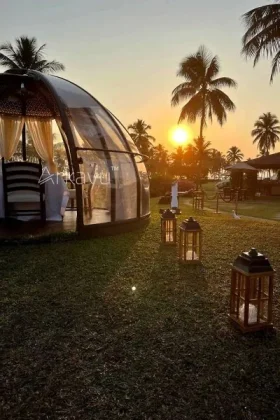
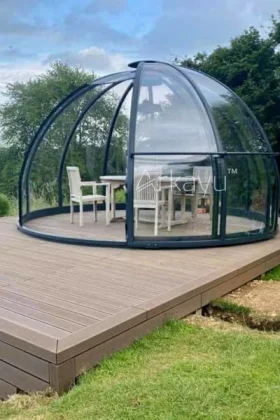
The most common type is the hemispherical dome, which offers a classic curved form and is widely used in glamping domes, garden domes, and leisure spaces.
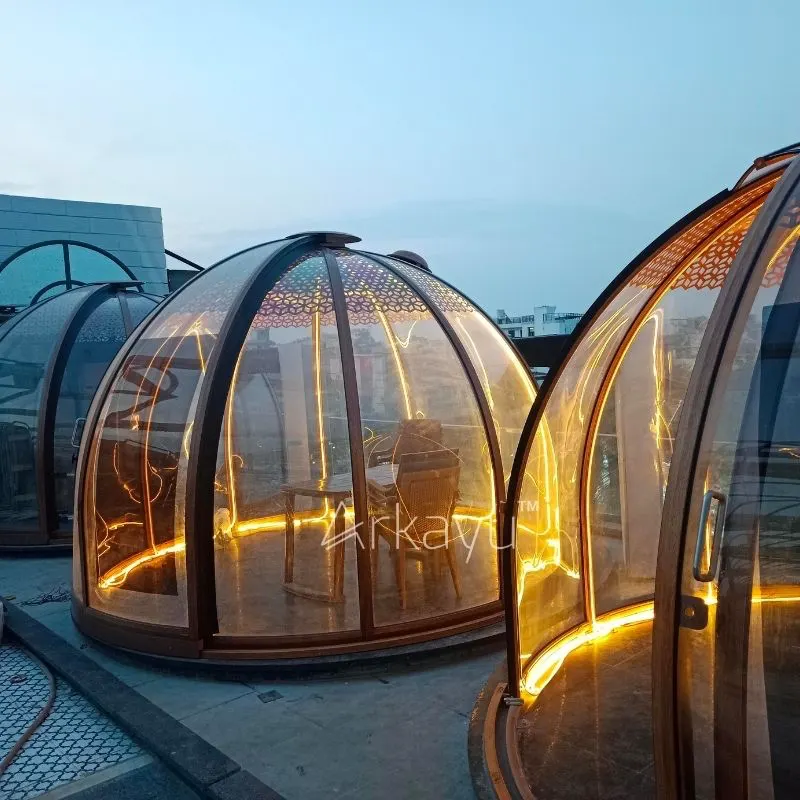
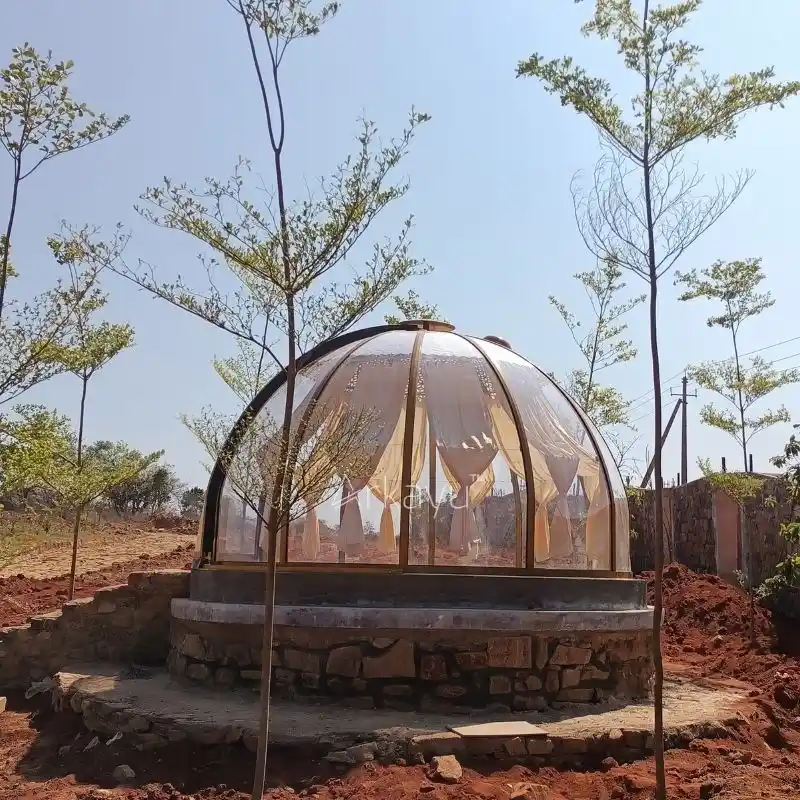
The second type is the oval or capsule shaped dome, which provides extended internal space and is suitable for applications such as stay units or wellness areas.
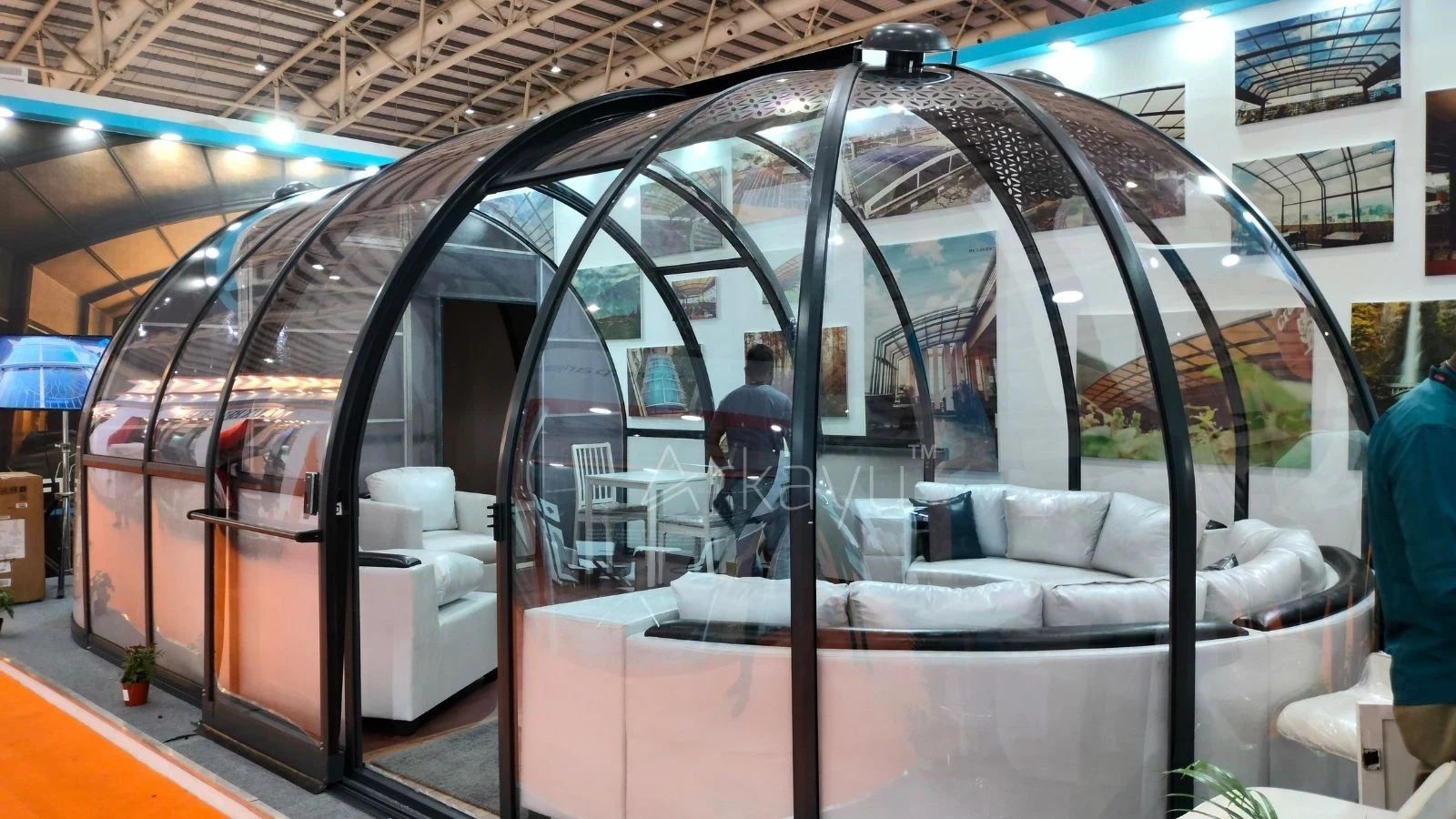
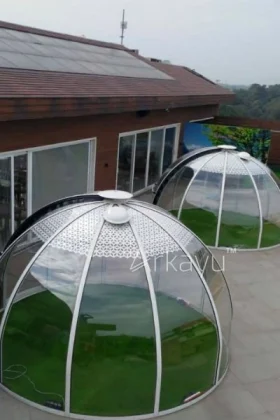
The third configuration involves parallel domes connected through a passage, creating larger, interconnected spaces. This design is particularly useful in hospitality projects where multiple functional zones are required.
Each type offers flexibility in design while maintaining structural efficiency.
Materials & Structural Components
The performance of a polycarbonate dome depends on the materials and construction system used.
The primary structure is made using aluminium profiles, which provide strength while keeping the overall system lightweight. Polycarbonate panels are then fitted onto this structure using EPDM gaskets, ensuring a clean finish and proper sealing.
Polycarbonate offers several advantages:
- High impact resistance (non shattering)
- Lightweight compared to traditional materials
- Ability to be curved into dome shapes
- UV resistant surface
This combination of materials ensures durability, ease of installation, and long term performance in outdoor environments.
Applications of Dome Structures in India
Polycarbonate domes are used across a wide range of applications where design and experience play a key role.
In resorts, they are commonly used as glamping domes, offering unique stay experiences that attract guests. In restaurants, they function as dining domes, especially in rooftop or garden settings.
In residential spaces, domes can be used as leisure zones, private hangout areas, or even to enclose pools and gazebos for a more controlled and private environment.
They are also increasingly used in the wellness industry for activities such as spa treatments and relaxation spaces, where privacy and ambience are important.
However, it is important to consider environmental factors. Due to the greenhouse effect, domes can experience heat buildup in direct sunlight, making them more suitable for evening use, shaded areas, or controlled environments.
To explore dome solutions in detail, you can visit the Domes page.
You can also learn more about ARKAYU on the About page or refer to the FAQ section. Contact us for a free consultation.
At ARKAYU, we design polycarbonate dome structures that combine engineering precision with architectural innovation helping you create spaces that are both functional and unforgettable.