TABLE OF CONTENTS
Roofing Challenges in Large Public Spaces
Designing roofing for large public areas comes with multiple challenges. Weather unpredictability especially intense sun and heavy rainfall can disrupt usability and comfort. In high footfall spaces like temples and banquet venues, this directly impacts crowd movement and overall experience.
Heat accumulation is another major concern. Fully covered areas tend to trap heat, while open spaces expose users to harsh conditions. Additionally, covering large spans without introducing too many intermediate columns is a structural challenge, as columns can restrict movement and reduce usable space.
Drainage also becomes critical in large installations, where improper planning can lead to water accumulation. Beyond functionality, these spaces demand aesthetics that align with their importance whether spiritual, commercial, or experiential.
Temporary vs Permanent Roofing- A Practical Perspective
In many projects, especially large public or commercial developments, the decision between permanent and flexible roofing is not always straightforward. Regulations, approval processes, and interpretations can vary across locations. While retractable roofing systems are often considered more adaptable and less restrictive compared to permanent construction, the exact classification may depend on local authorities and project specific conditions.
Rather than taking a fixed approach, many developers and institutions evaluate retractable solutions as a way to balance flexibility, compliance, and functionality. This allows them to create usable covered spaces without permanently altering the structure while still leaving room for future modifications if required.
How Retractable Roofs Solve These Challenges
Retractable roofing systems address these challenges by introducing flexibility into large scale architecture. Instead of choosing between fully open or permanently covered spaces, these systems allow dynamic control based on weather and usage.
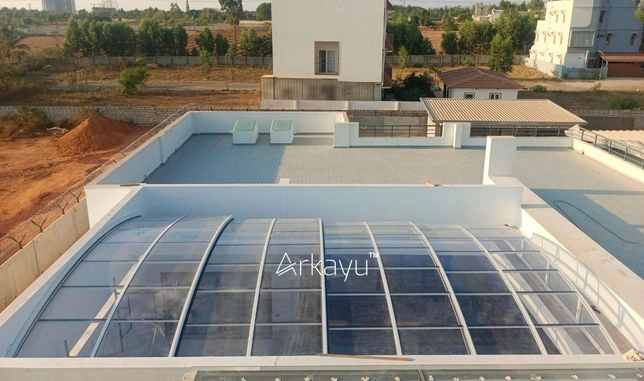
For example, polycarbonate retractable roofs Polycarbonate Retractable Roof are often used in large span applications where minimal columns are preferred, allowing uninterrupted movement below. In areas where complete shading is required, PVDF fabric retractable roofs provide effective coverage while remaining economical for large spaces.
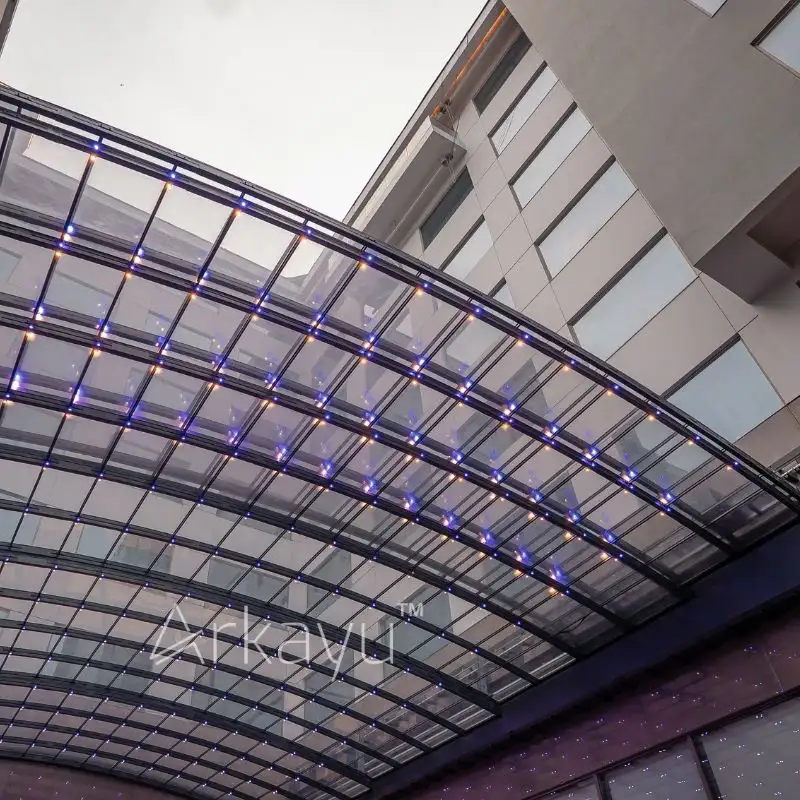
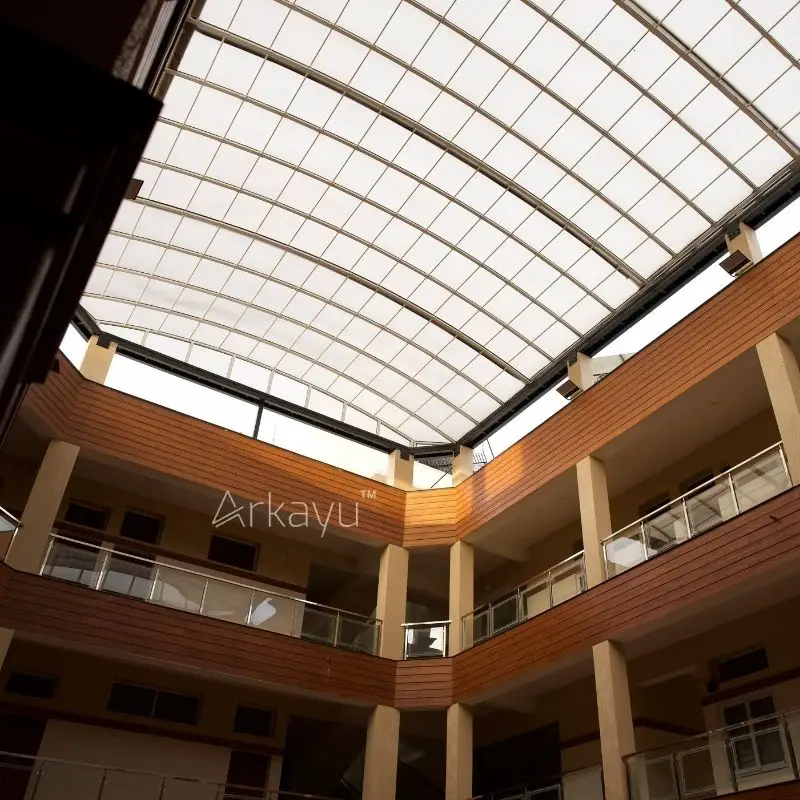
For projects that require ventilation along with protection, bioclimatic aluminium louvered roofs allow controlled airflow through adjustable louvers. In cases where an existing transparent roof needs heat control, Skyzip fabric sun screens can be integrated without major structural changes.
This adaptability is what makes retractable outdoor roofs a practical solution for large public environments.
Applications: Temples, Hotels & Restaurants
Retractable roofing systems are increasingly being adopted across different large scale applications, each with its own requirements.
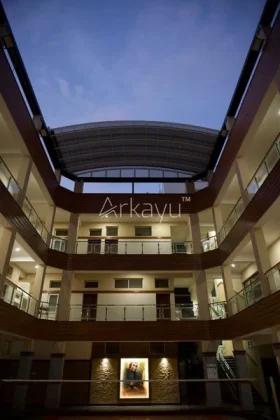
In temples, maintaining a connection to the open sky is often important both architecturally and spiritually. Retractable roofs allow spaces to remain open when needed while providing shelter during harsh weather, improving comfort for devotees without altering the essence of the structure. Installations in major religious spaces demonstrate how these systems support both functionality and tradition.
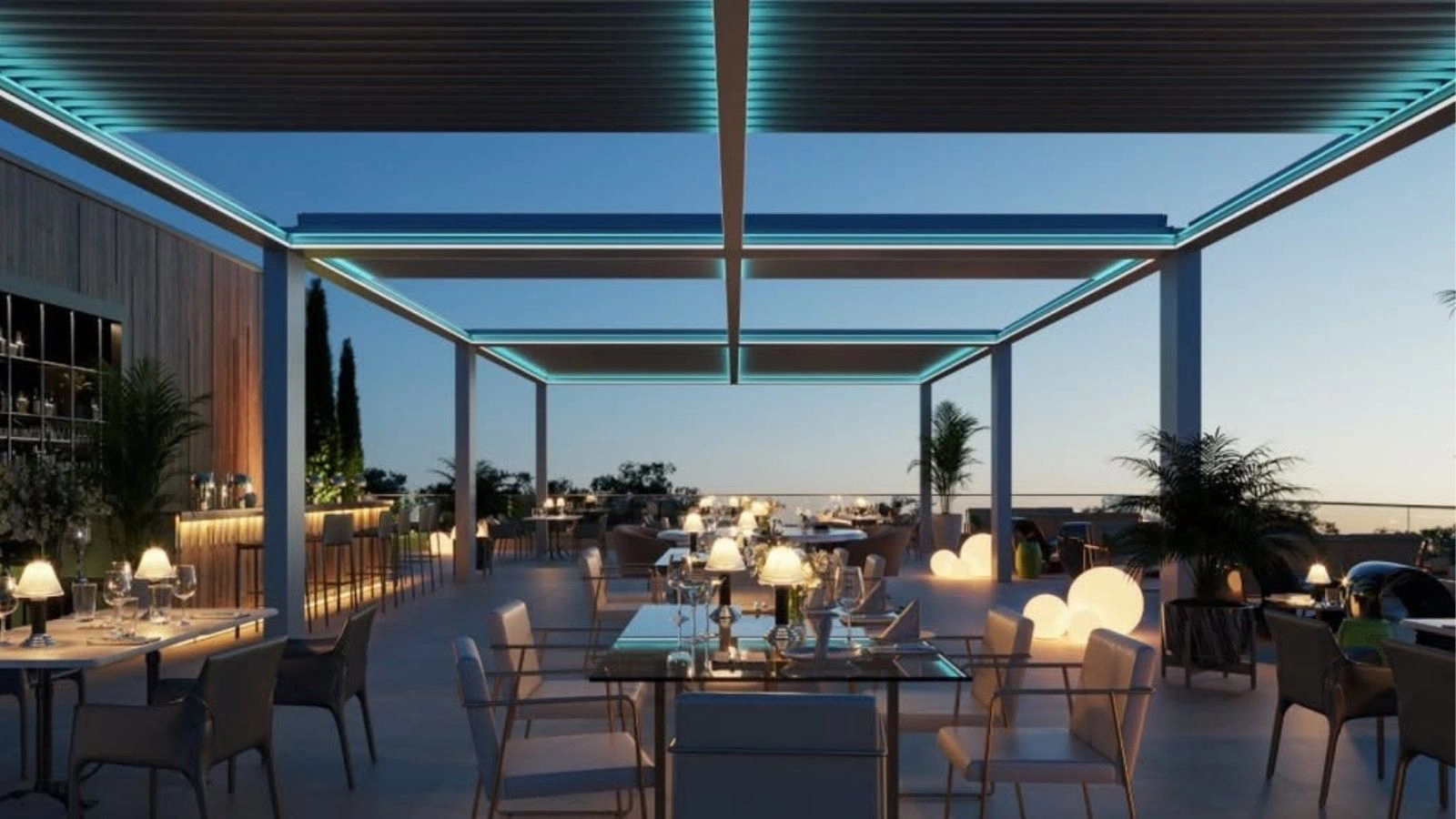
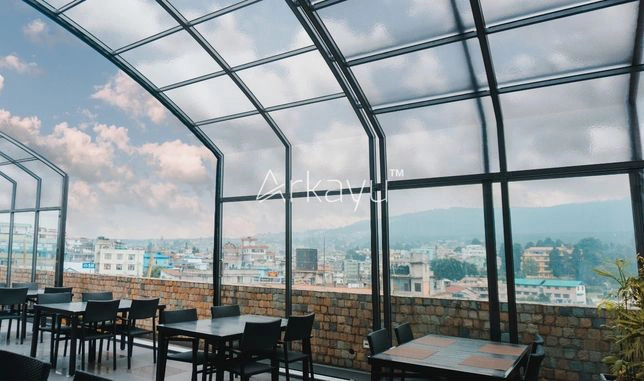
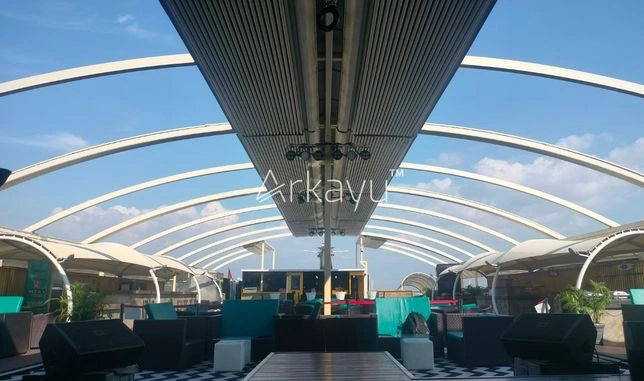
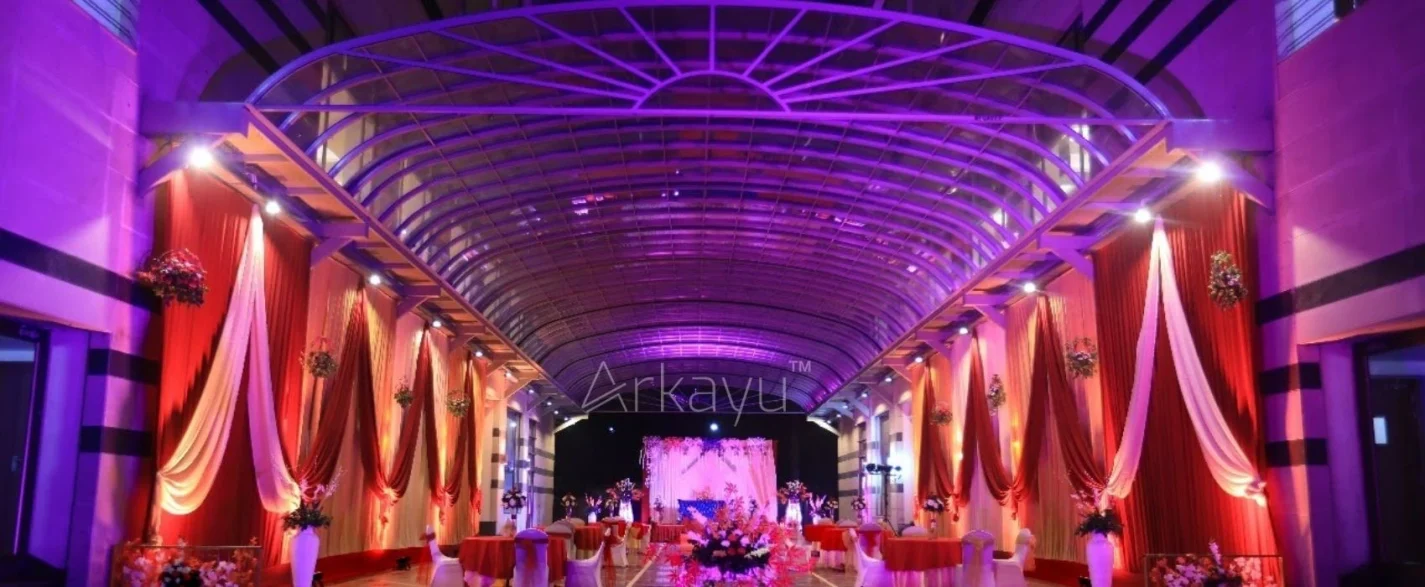
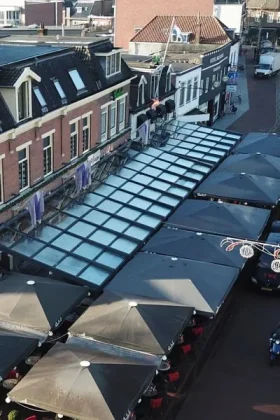
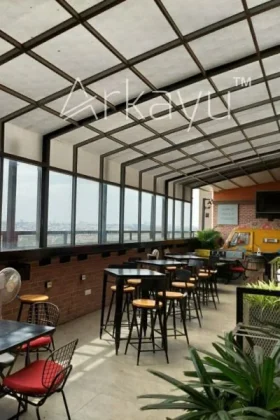
In hotels, restaurants, and banquet halls, the focus shifts to experience and revenue. Outdoor seating is often preferred by customers, but weather limitations reduce usability. By using retractable or collapsible roof systems, businesses can ensure consistent operation across seasons while enhancing ambience. The addition of lighting and openable roof designs further elevates the overall experience, making these spaces more attractive for events and gatherings.
Design, Scale & Execution Considerations
Executing retractable roofing in large spaces requires careful planning and engineering. Factors such as span, structural load distribution, drainage systems, and movement mechanisms must be considered from the design stage itself.
For projects prioritising fewer columns and large uninterrupted spaces, polycarbonate retractable roofs are often preferred. For wider areas where cost optimisation is important, modular systems like PVDF fabric retractable roofs are used in parallel configurations.
Material selection, motorisation, and integration with existing structures play a crucial role in long term performance. Systems such as telescopic roofs, sliding ceiling mechanisms, and automatic roof systems are now being designed to seamlessly blend into architecture while maintaining operational reliability.
To understand how such systems are engineered and executed, you can explore the About ARKAYU page or visit the FAQ section for more insights.